5 minute read
How do I let go, set myself free—set him free?
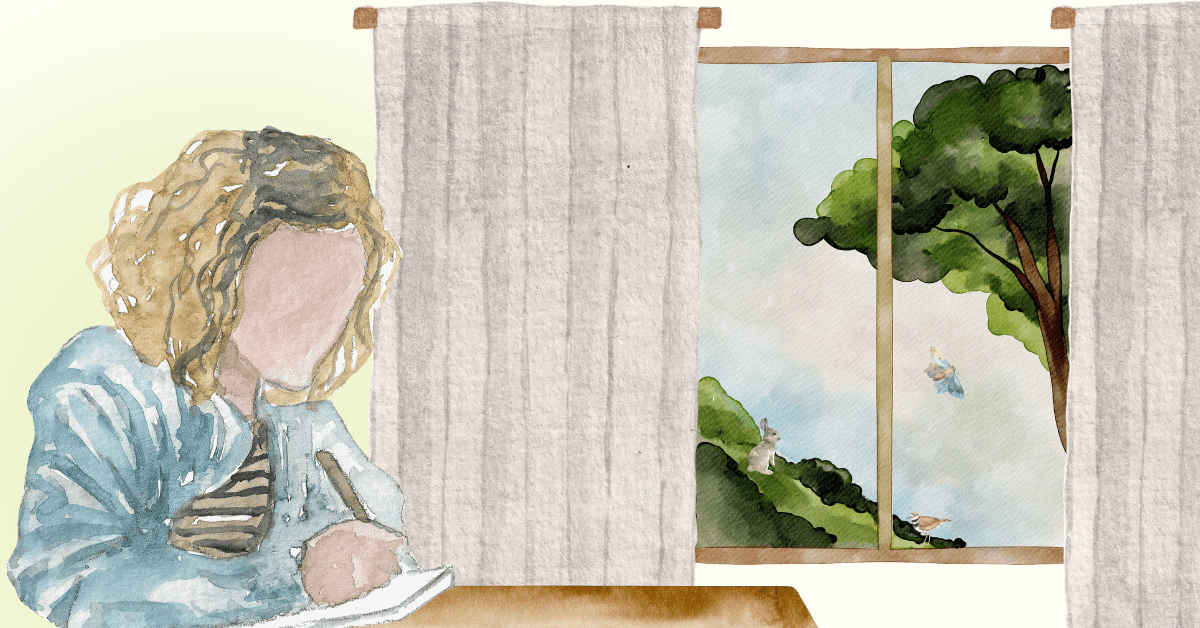
For years, I had a purpose: to write (to finish) my story (my book).
Every day, that finish line up ahead is what kept me running; gave me energy enough to keep going, editing, rewriting. There was always something to do in order to finish.
A Grief Note: Identifying a mission, a focus, a passion, a reason to live, becomes a turning point for the bereaved parent.
I just didn’t expect…
Writing a book wasn’t going to bring Sam back, but maybe, in time, the writing would change me.
(from Willower: Rewriting Life After Unimaginable Loss, Chapter 8. Grieving: less alone)
Now that I did what I set out to do, completed my mission, finished writing a book, what do I do now, in the after?
Now, post-publishing, it’s too dark and still and quiet and vacant in my head.
Honestly, I didn’t expect the after would be so silent. Ah, there it is. The word expect is the problem, isn’t it? Did I really expect to not expect any fallout? Were things ever going to be any different? Did I really believe I’d crack some mystical code with my writing, bring him back from the dead with my words? For a long time, I wanted to believe this—hoped that maybe . . .
Yes, the writing (over time) has changed me, but . . . Now what? How do I let go of what was my mission, my focus for the past sixteen years (and the nine years before that)? Just let it be, and walk away?
Yes, yes, I know, I know. I wrote a book! And I’m proud of what I’ve done. How I’ve worked to keep my son, his memory, alive. I just wasn’t expecting to feel so out of sorts, so blah, in this after you finish writing a book time slot. What do I write about now? What if I really am out of words, ideas? What if this dense fog and exhaustion is my new normal?
What to do? Well . . . whenever I’m trying to understand why I feel the way I do, or just need an escape, I usually read a book.
Books were and still are my lifesavers, my companions, my mentors.
(from Willower: Rewriting Life After Unimaginable Loss, Chapter 7. Rewriting: lifesavers)
the timing of it seemed magical
I’ve never been a Shakespeare fan but decided, after listening to her interview on Velshi’s Banned Book Club podcast, I’d read anything by Margaret Atwood.
After randomly scrolling through titles, this one caught me eye—Hag-Seed: William Shakespeare’s The Tempest Retold.
I didn’t know beforehand what I would find inside this novel, a New York Times best seller in which Atwood reimagines Shakespeare’s final, great play, but I stumbled onto the best gift ever. And the timing of it seemed magical too. Like I was meant to find this book and read it on this day . . . now, in the after.
Of course, the story’s got passion, vengeance, humor, magic, but what stood out to me was the way the protagonist Felix, a bereft father, grieved the death of his young daughter.
I was astonished at how similar we were in our grief process.
A Grief Note: When we learn how similar we are in how we grieve and cope with our loss, it really does help us to feel less alone, less crazy.
Felix and I both knew we were only imagining our children were with us, growing taller and older with time, but we didn’t care, and engaged in the wistful daydreaming anyway. We used our imagination to survive.
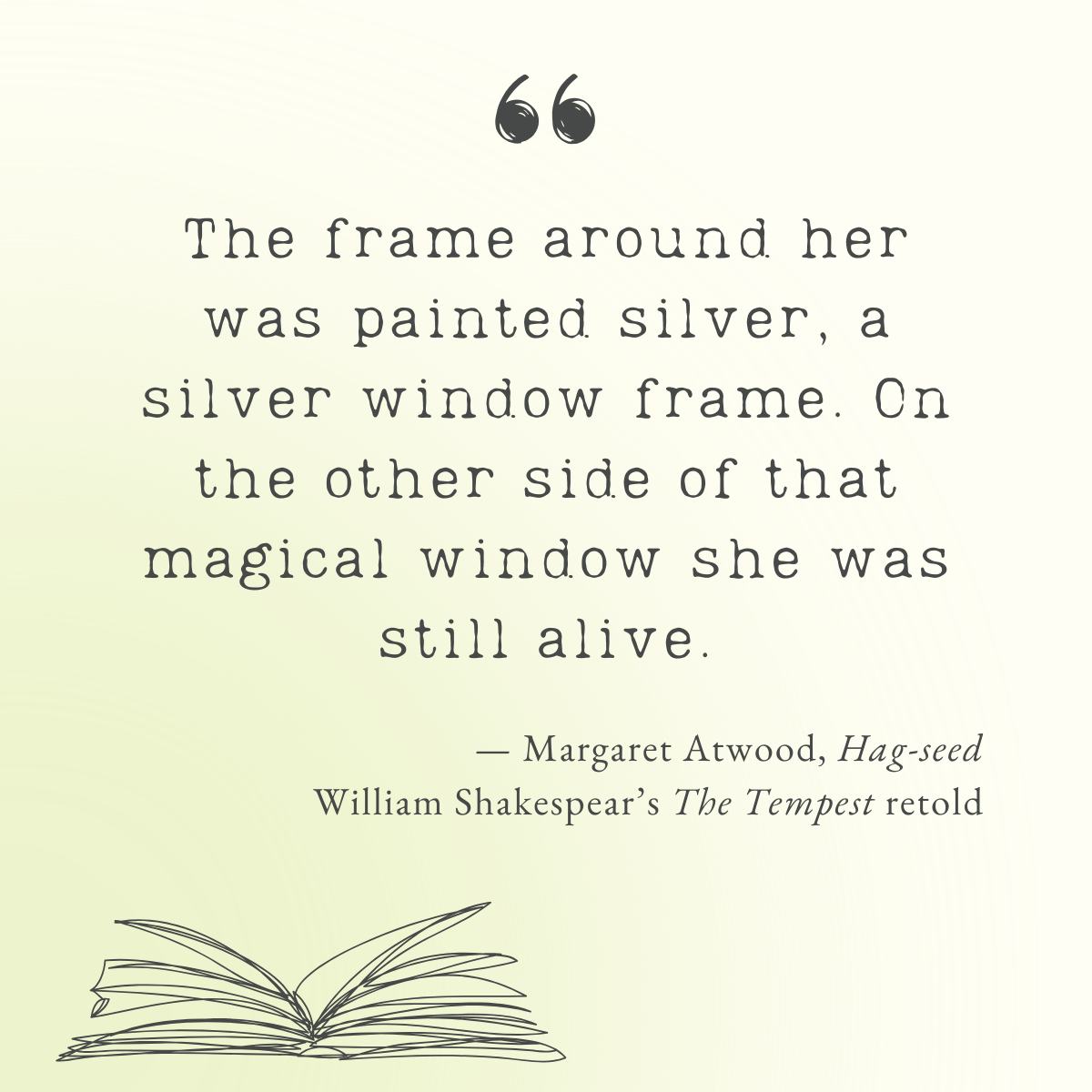
And . . . just as I had obsessed over every word, every detail in my book, he, too, had obsessed over his adaptation of The Tempest.
“Inside the charmed bubble” we’d both created, our shadow children would live again.
A Grief Note: Bereaved parents may develop a dual image of their deceased child, a real (our memory) and a shadow (our current chimera) image.
We carry them with us—in our pockets, in a pendant, a ring wrapped around our finger, or hidden in our hearts. We survive, and continue moving from here to there, migrating through time—through milestones, birthdays, and anniversaries—and eventually, the days and nights turn into years.
(from Willower: Rewriting Life After Unimaginable Loss, Chapter 9. Migrating: eleven years)
the time it takes to…
It took me eleven-years to gradually absorb the truth. For Felix, it was in the twelfth year when the truth came over him.
What was our endgame? My son is there in various frames, photos on walls in every room . . . and here, waving to me from that special place where I keep him inside my heart. Felix’s daughter is there in that silver frame . . . and here, watching him as he leaves their holding cell in which he’s kept her tethered to him for so long.
Is it time to set ourselves free—to set them free?
Now, in the after, in this silence, I’ve thought a lot about this. And how for years now, I’ve been in the process of letting go, untethering us.
Now that my book is done and published . . .
Now that I did what I set out to do . . .
Maybe I feel this way, dense, foggy, exhausted, because I’m transitioning, changing again.
Maybe, like the moth passing through the pupal stage, this is my buried in the soil phase where I’ll be for now, curled up in my dark and still and quiet and vacant mind.
Hopefully soon, I’ll crawl up and out of this place and fly free—and let him fly free too. So we can both move on, together but apart, and find something else to explore and do . . . in the after.
A Grief Note: The grieving mother or father continues to relate to their deceased child. This is how we're able to reconnect to life again (as counterintuitive as that may seem).

See my Book Page to learn more about my memoir Willower.
Let’s connect. Scroll a little further and leave me a comment and/or subscribe below (your email address will not be published).
 Willower.org