

3 minute read
a private note
WHENEVER I READ a book, I always find my very own personal takeaway, a sentence or two that stands out to me, seemingly as if the writer meant the message just for me—like a private note. The author may not have even meant for that particular line or two to be one of the story’s takeaways, and therein lies the magic (of words, and reading books).
Sometimes the stand-out string of words answers a question. Sometimes it acts as a suggestion, or a confirmation, a nod of approval. And though I’ve been sitting all alone, reading, when I close the book and fold that snippet into my back pocket, I feel less alone. Maybe I’m not so odd or different after all.
Sometimes I wish I could just call the author so they could hear the pitch of my voice, so I could tell them how one or two of their obscure lines have changed my thinking, my outlook, my ability to: fill in the blank.
the aha line
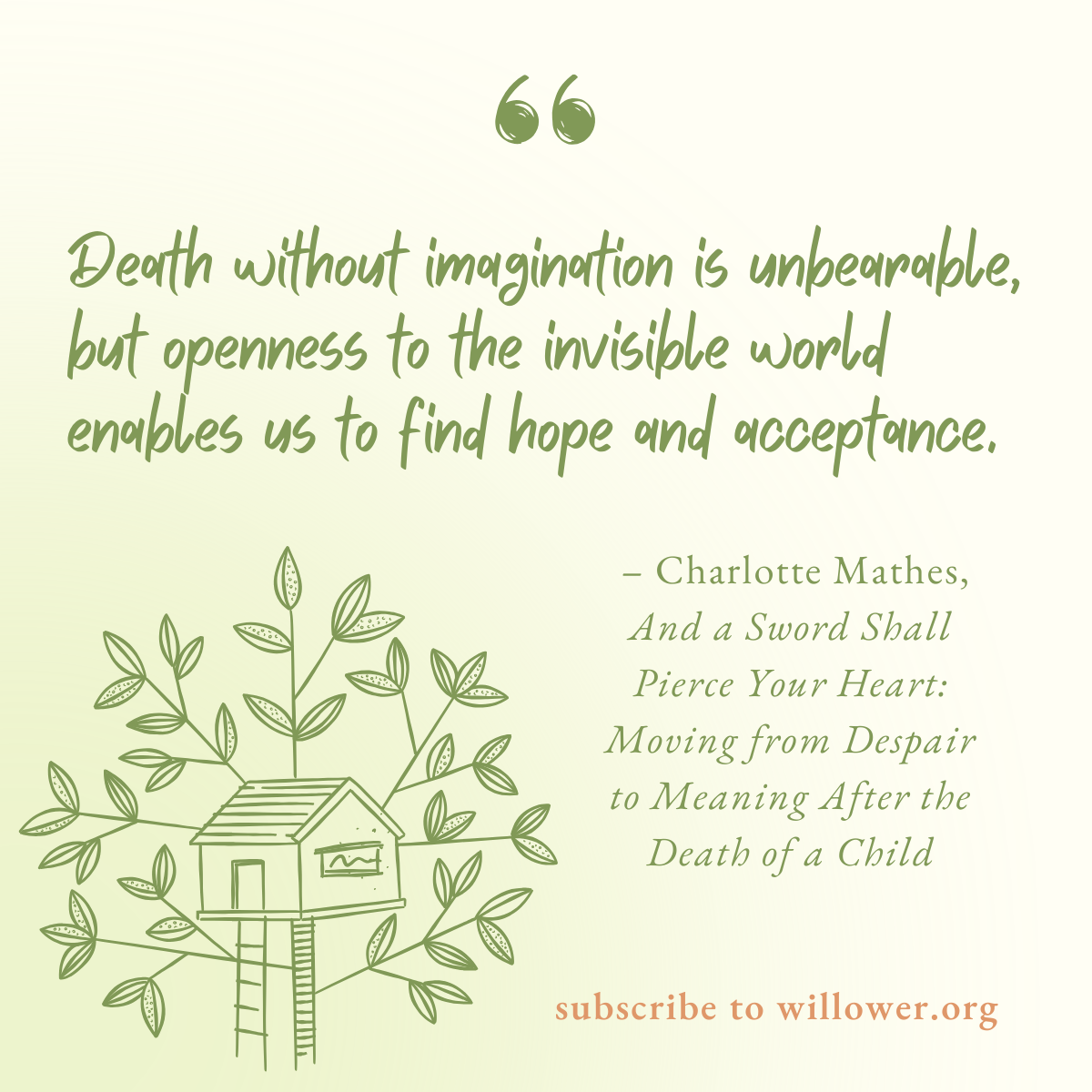
SEVERAL YEARS AGO, in the beginning stages of writing my book, I was reading another mother’s story of sudden loss and grief, And a Sword Shall Pierce Your Heart by Charlotte Mathes, when I found one of those very personal takeaways, the aha line that I needed to read: “Death without imagination is unbearable, but openness to the invisible world enables us to find hope and acceptance.”
At the time, in the depths of my despair and grief, I was imagining things that I hesitated to tell anyone about much less write about—things that seemed more real than imagined.
To survive what is an abnormal event, the death of a child, a modicum of insanity . . . is absolutely necessary.
a way of coping
WAS I GOING CRAZY? Yes! That’ll happen when you’re grieving the sudden death of your child. I wanted what I was imagining (my son Sam, still alive) to be real. And I wanted what was real (my son Sam, gone?) to not be. This was all part of the insane grieving process.
As crazy or impossible or lunatic as it seemed, if I occasionally saw my deceased son in moments of reflection, or sometimes heard his voice, his encouragement, what harm was there in this? It was my way of coping, my lunacy. To survive what is an abnormal event, the death of a child, a modicum of insanity—or lunacy (see how much better that word sounds?)—is absolutely necessary.
(excerpt from Willower: Rewriting Life After Unimaginable Loss: Chapter 6. SEARCHING: lunacy)
to imagine
IMAGINATION EASES THE PAIN. It softens the blows. It allows temporary reprieves from this permanent reality.
Allowing myself to imagine is what enabled me to work through my grief.
To step into that invisible world.
To rewrite the unimaginable.
And to eventually, in time, learn to live with the unbearable.
When people say, “I can’t imagine,” about the death of a child, living with such loss, I want to say, “I can only imagine. It’s how I live with the unimaginable.”
Excerpt from Willower: Rewriting Life After Unimaginable Loss: opening pages: about survival
Psst! Are you still there? Thanks for reading this far down. Do you have any personal takeaways that you’re carrying around in your back pocket? Please share/comment below. I’d really like to hear from you.
 Willower.org