
4 minute read
About HCM and the Hypertrophic Cardiomyopathy Association:
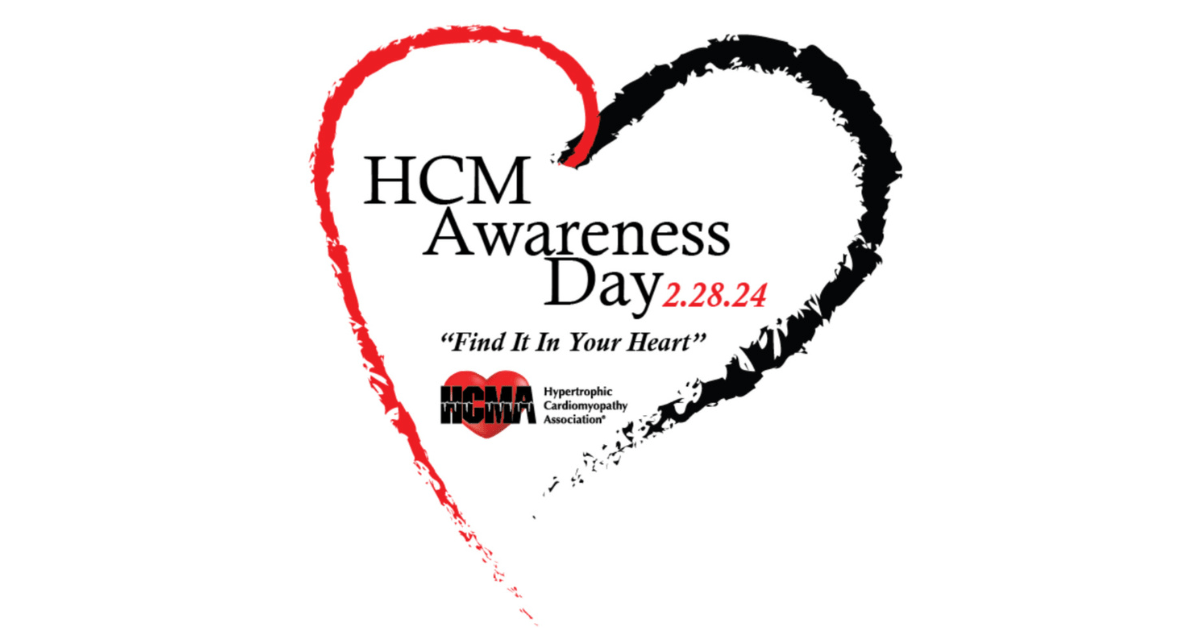
Hypertrophic cardiomyopathy (HCM) is a common genetic disorder that affects people regardless of gender, ethnicity, age or geographic location.
The HCMA (Hypertrophic Cardiomyopathy Association, https://4hcm.org) is the preeminent organization improving the lives of those with hypertrophic cardiomyopathy, HCM, preventing untimely deaths and advancing global understanding.
Founded in 1996, HCMA is committed to providing support, education, advocacy and advancing research, understanding and care to those with HCM.
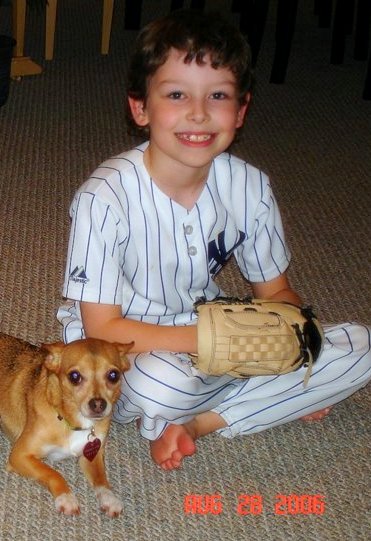
Lisa Salberg, founder of the HCMA, was and has been really helpful and forthcoming with information since Sam’s (my 9-yr-old son) sudden death caused by HCM.
Contact the HCMA
If you’re in need of info or help regarding HCM, this is the go-to organization.
Phone: 973-983-7429; Email: Support@4hcm.org
My story
At age nine, Sam’s heart condition, its size and hypertrophy, was extremely rare. And though we did everything we could to save him, my beautiful boy died from sudden cardiac death caused by HCM.
Please read, remember, and pass on these two requests:
- ONE: Please be kind to others. Though they may appear to be perfectly fine, you never can tell what others are carrying in their hearts.
- TWO: Please . . . Please pay attention when driving and pull over or move out of the way when you hear those sirens or see those flashing lights.
In the car windows we passed, I saw warped reflections of flashing lights alternating with sky and drifting clouds, an occasional impassive face, and more drivers on cell phones, insulated in their intact and air-conditioned worlds. A child was dying, soldiers were fighting, and yet cars and SUVs continued blocking the battle.
An excerpt from Willower: Rewriting Life After Unimaginable Loss (from Chapter 4. Monday)

Willower: Rewriting Life After Unimaginable Loss proves that without the power of words, story, and imagination (okay, and maybe a little magic), surviving the death of a child and finding one’s way through grief and back to the living again would be impossible.
An excerpt from Willower: Rewriting Life After Unimaginable Loss (from Chapter 6. Searching)
Sometime after Sam’s cardiac autopsy, I had asked Dr. Angstrom to seek a second opinion, a confirmation, from Dr. Brooke at the Armed Forces Institute of Pathology. A month had passed since Sam’s death. I knew an autopsy report would come, but I didn’t expect to receive a phone call from Dr. Brooke himself.
“Was the mass a tumor or HCM?” My heart was pounding, remembering what Sam’s pediatrician had said about HCM years ago: And we don’t want it to be that.
“It was HCM,” Dr. Brooke said. “Hypertrophic cardiomyopathy.”
HCM can manifest differently in different family members. What if it was hiding, lurking in Joey’s heart? That dark cloud overhead wasn’t going anywhere. We’d have to stay vigilant, keep seeing cardiologists, checking Joey’s heart over the years, since HCM usually rears its ugly head during adolescence. I was exhausted. I just wanted to hear better news, something good, some assurance, certainty. “So . . . HCM?”
“Yes,” he confirmed. “I’m very sorry for your loss.”
I became that desperate, hypervigilant medical researcher again and continued to question him. “What caused it? Is it genetic?”
“Further testing would need to be done,” he said.
Later, further genetic testing would be done, and we’d learn that Sam was negative for any of the known genetic mutations for HCM.
“It was definitely HCM then? You’re certain?” Nervous, I kept repeating myself, pushing, not wanting to hang up because then I’d be alone with the information. In the past, I had seen the phrase “masquerading as” in my research—a tumor masquerading as HCM. “Could there be any chance, a one-percent chance, that this was anything other than HCM?”
“I don’t think so . . . No, one hundred percent sure.” He told me he had a daughter—his way, I guess, of saying he couldn’t imagine. “Again, I’m so sorry for your loss.”
When the call ended, I didn’t know what to do. Nothing had changed. Only now, I had a report with the name of the killer printed on it. Lunatic me wrote a melodramatically venomous letter to HCM, the Heart-stopping Child Murderer. But lucid me knew I was out of my mind and shredded it. Who would I send it to, anyway?
I searched online and read on Mayo Clinic’s website: Hypertrophic cardiomyopathy (HCM) is a disease in which the heart muscle becomes thickened (hypertrophied). The thickened heart muscle can make it harder for the heart to pump blood. Rarely, hypertrophic cardiomyopathy can cause heart-related sudden death in people of all ages. Because many people with hypertrophic cardiomyopathy don’t realize they have it, sudden cardiac death might be the first sign of the condition. It can happen in seemingly healthy young people, including high school athletes and other young, active adults.
I went to the Hypertrophic Cardiomyopathy Association (HCMA)’s website, https://4hcm.org, and contacted the CEO and founder, Lisa Salberg. She was kind and took the time to review and discuss at length with me Sam’s pathology report. But I wasn’t prepared for the force of her words, the blunt observations she made about the anatomy of Sam’s heart, the extent of its disease.
Using the word massive to describe his heart’s hypertrophy, its thickness, and heaviness, she explained how extremely enlarged his heart was; and in detail, described how it weighed more than the heart of an average-sized man. “He might’ve been considered for a heart transplant, though that wouldn’t have guaranteed long-term survival either,” she said. “And without an implantable defibrillator, which—though possible—isn’t commonly implanted in young patients, there couldn’t have been a different outcome.”
It was too soon, I realized too late, for me to be having a conversation about the actual weight of my child’s heart. Hearing that there couldn’t have been a different outcome was the finishing blow, the last thing I remember hearing before my world went densely silent again.

 Willower.org
Sending you hugs…
>
LikeLiked by 1 person
Thank you!
LikeLike